
Borrow or Buy? A Simple Test for Things You Rarely Use
A four-step test for deciding whether to borrow, rent or buy something you rarely use: count the uses, work out the cost per use, check what the numbers miss, and apply simple rules of thumb.

zabil
Most homes have a cupboard of things that were used twice: the pressure washer, the extra-large suitcase, the party speaker. Each seemed like a good idea at the time. The question worth asking before the next purchase is not “is borrowing cheaper?” but “how often will I really use this, and what do I give up either way?”
Westland Public Library describes the case for borrowing as avoiding the need to buy “expensive equipment that you might only use occasionally”. That is a fair summary, but it leaves out the cases where buying is right. Here is a four-step test you can run on any item. SodraTech is developing a borrowing and lending platform, Barangin, which is still in development, so this question is close to our own.
Step 1: Count the uses honestly
Estimate how many times you will use the item over the next three years. Base it on what you actually did last year with similar things, not on the hobby you plan to take up.
If the honest answer is “I am not sure”, treat the item as a trial and borrow first. Goethe-Institut Jakarta says some of the items in its Library of Things, such as padel rackets, a guitalele and an instant camera, can be borrowed by people who want to “try them before buying them”. Westland’s page makes the same point: borrowing lets you try new hobbies “without committing to full ownership”.
Step 2: Work out the cost per use
Use this formula:
Cost per use = (price + upkeep + storage − what you could resell it for) ÷ number of uses
Then compare it with the cost per use of the alternatives. Renting means a fee each time. Borrowing from a friend or a scheme means a favour, travel time and sometimes a deposit.
A shortcut is the break-even point: price ÷ cost of one rental. Here is a worked example with made-up numbers, not real prices. Say a pressure washer costs Rp1,500,000 and renting one costs Rp150,000 a time. The break-even is 10 uses. If you expect 3 uses over three years, renting or borrowing wins. If you expect 30, buying wins, even after adding something for storage and upkeep.
Upkeep is easy to forget: batteries, servicing and replacement parts. Storage is easy to undervalue: Waltham Forest Council’s Library of Things page lists “cuts down on clutter” among the benefits.
Step 3: Check what the numbers miss
- Timing. A borrowed item has to be free when you need it. In our reading, items needed at short notice, or on the same dates as everyone else such as weekends and holidays, are harder to borrow. Waltham Forest’s page says borrowing “beats next-day delivery”, but that depends on the collection being near you.
- Safety and skill. Power tools can hurt you. The University of Oslo Library says it cannot give guidance on using its equipment and that “all use is at your own risk”. Guildford’s scheme asks borrowers to learn how to use each item safely. Make sure you have instructions before you borrow anything that can injure you.
- Fit and hygiene. Items that sit close to your body, such as helmets or shoes, are a judgement call. Fit and hygiene count as much as price.
- Damage. If you break a borrowed item you may owe the owner. In Indonesia, Articles 1740 to 1753 of the Civil Code set out who bears the loss.
- Space. If you do not have anywhere to keep it, buying has a cost that never shows on the receipt.
What libraries choose to lend is a useful hint
A library of things has to decide what is worth stocking, so its list shows which items it treats as occasional-use. The pages we read lend a drill, a circular saw, a tent, a hammock, a sleeping mat, trekking poles, a pressure cooker, an air fryer, a badminton net, board games and event supplies.
In our reading, what these have in common is that they are expensive for how often people use them, bulky to store, or something you may want to try before committing. If your item fits one of those descriptions, borrowing deserves a serious look. If it does not, such as a tool you would use every week, buying is usually the better answer.
Three mistakes to avoid
- Counting hoped-for uses. Three uses you will really make are worth more to the test than thirty you hope for.
- Treating borrowed as free. Your time, the trip to collect it, a possible deposit and the risk of breaking it all have a cost.
- Skipping the return date. Without one, a favour can turn into friction.
Rules of thumb
- Buy when you will use it often (above your break-even), you need it at short notice, it is personal or safety-critical for you, or you cannot find one to borrow nearby.
- Rent when you will use it only a few times, you need it on a fixed date, and a business charges a fee per use. If money changes hands, the arrangement looks like a rental rather than a loan, and different Civil Code rules apply (Article 1548).
- Borrow when you will use it a handful of times, someone you trust or an organised scheme has one, and you can agree on the condition and the return date.
Borrowing from a person without the awkwardness
Most of the awkwardness comes from three things nobody said out loud: how long, what condition and who pays if it breaks. Say them before the handover, and take a dated photo of the item. For organised schemes, our guide to libraries of things shows what rules they set.
Where Barangin fits
The Barangin project page puts the idea this way: “Instead of purchasing items that may only be needed occasionally”, the aim is for people to discover available items, connect with lenders and arrange borrowing through a more structured digital experience. Its objectives include encouraging “responsible sharing and more efficient use of existing resources”.
Barangin is currently under development, and its features, policies and launch plans may evolve. We have not said whether borrowing on it will be free or paid, and there is no launch date. The test above works with or without a platform: count the uses, work out the cost per use, then check what the numbers miss.
If you are planning a platform where people lend, book or pay for things, tell us about your business and our systems and technology team can talk it through.
Sources, all read on 19 October 2026: Westland Public Library, Library of Things; University of Oslo Library, Library of Things; London Borough of Waltham Forest, Library of Things (last updated 27 May 2026); All Saints Church Guildford, The Guildford Library of Things; Goethe-Institut Jakarta, Library of Things press release; and SodraTech’s Barangin project page. The cost-per-use formula and the figures in the example are our own arithmetic, not data from those sources.
Ditandai
Layanan terkait
Karya terkait
Di mana ini telah diterapkan.
Local & Growing Businesses
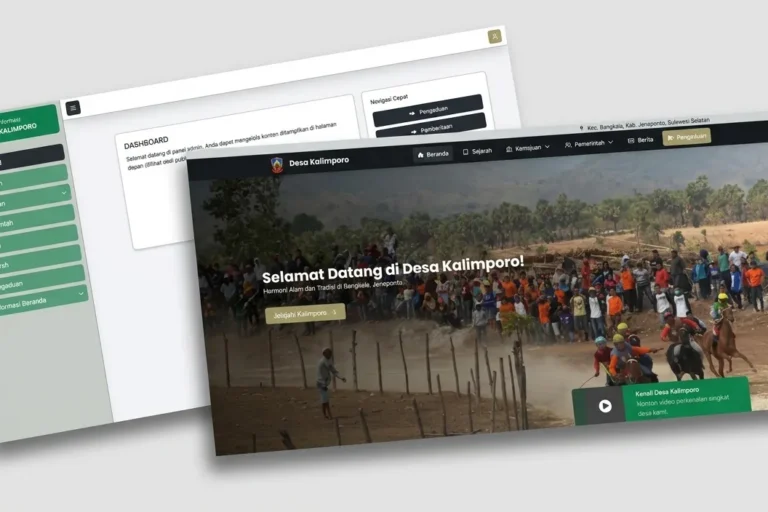
Desa Kalimporo
Desa Kalimporo
Platform profil desa yang menyajikan struktur pemerintahan, data kependudukan, potensi lokal, dan program desa kepada khalayak yang lebih luas.
Tourism & Hospitality
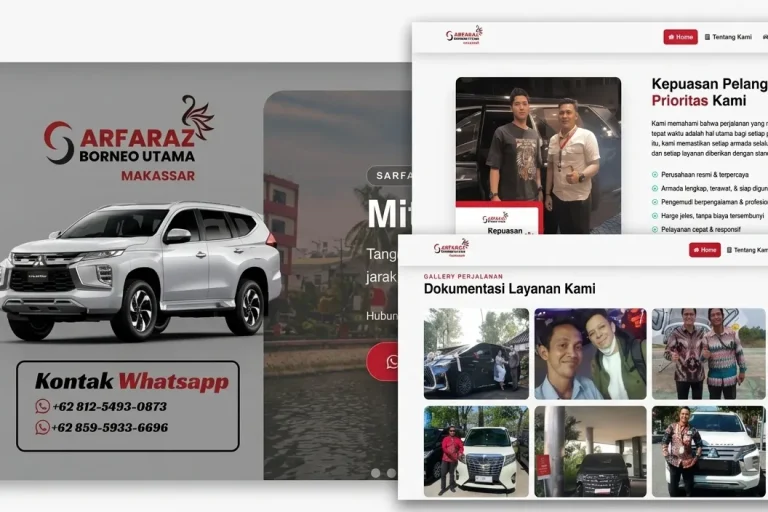
Sarfaraz Rent Car Makassar
Sarfaraz Rental Mobil Makassar
Website perusahaan rental mobil yang menampilkan armada, tarif, dan syarat sewa, lengkap dengan kontak yang mudah dihubungi pelanggan dari perangkat apa pun.
Jasa Profesional
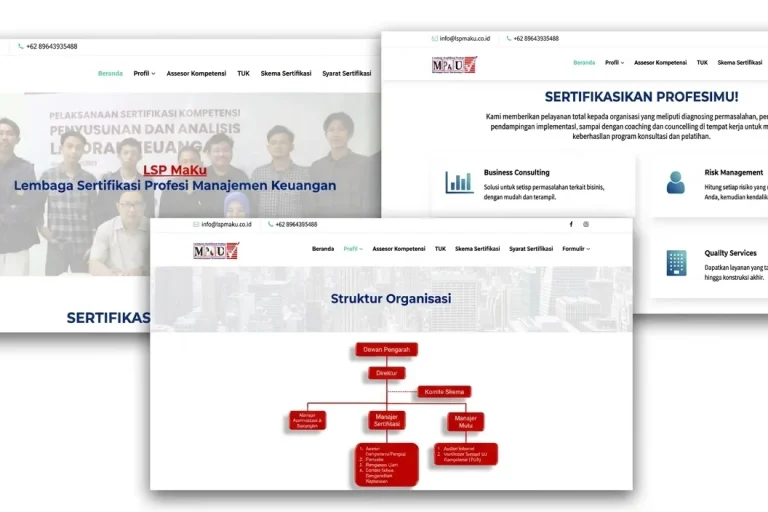
LSP MaKu
LSP MaKu
Website lembaga sertifikasi profesi yang mencakup skema sertifikasi, jadwal, dan panduan bagi peserta.
Baca lebih lanjut
Artikel terkait.
Pertumbuhan Digital
Borrowed Item Damaged or Lost? Who Pays Under Indonesian Law
A plain-English summary of the Indonesian Civil Code chapter on pinjam pakai (Articles 1740 to 1753): what a borrower and a lender owe, how…
Pertumbuhan Digital
What Is a Library of Things? How Borrowing Everyday Items Works
What a library of things is, what it lends, how borrowing works and the rules that keep a shared collection going, using pages from…

Pertumbuhan Digital
How to Build Trust on a Freelance or Task Platform: Escrow, Reputation and Disputes
Escrow, reputation and dispute resolution for freelance and task platforms, using Tokopedia's published terms and Komodoplex Labs' Reputask research as examples, plus questions to…