
How to Build Trust on a Freelance or Task Platform: Escrow, Reputation and Disputes
Escrow, reputation and dispute resolution for freelance and task platforms, using Tokopedia's published terms and Komodoplex Labs' Reputask research as examples, plus questions to settle before you build.

zabil

Anyone building a platform where clients hire workers faces the same three questions from both sides. Will I be paid? Will the work be real? Who decides if we disagree? Get them wrong and users take deals off the platform, which is the one place you can no longer help them.
This guide uses Reputask as a worked example. It is an R&D project from Komodoplex Labs, our technical partner for Systems & Technology work. Its lab page calls it a reputation-based task platform with escrow, dispute resolution and an on-chain audit trail on Solana, and labels it “On-Development”: a devnet proof of concept, not a mature commercial product. We cover what it is exploring, what a large Indonesian marketplace does today, and what to decide before you build.
The four pieces of platform trust
- Reputation: a signal of who is reliable.
- Escrow: money held until the work is accepted.
- Dispute resolution: someone, or something, that decides when the parties disagree.
- An audit trail: a record of what was agreed, delivered and decided.
The Reputask page lists the same four goals: reputation that is easier to read and harder to manipulate, escrow that reduces friction, a clearer and more auditable dispute flow, and a hybrid approach that stays friendly to non-crypto users. Its question is what happens if trust is designed into the system instead of only promised in the interface.
Escrow: how an Indonesian marketplace describes it
The Indonesian term is “rekening bersama” (joint account). Tokopedia’s terms and conditions, which we read on 11 October 2026, define its official account as a joint account agreed between Tokopedia and users for transactions on the site. After the buyer confirms receipt, or an automatic confirmation happens, the buyer’s funds are forwarded to the seller and the transaction counts as complete. The terms also tell buyers that transactions made outside that account are their own responsibility.
Three design decisions sit inside that short description: what releases the money, what happens if the buyer says nothing, and what freezes it. Tokopedia’s Resolution Center is the answer to the last one. For sellers who have not completed Account Integration, it automatically holds payment to the seller until the reported problem is resolved.
The Reputask landing page, which is in Indonesian and still points its buttons to a coming-soon page, describes milestone escrow: each stage’s funds are secured first and released once the deliverable is approved. It says the worker stays entitled to payment for approved work if a client disappears. These are claims on a pre-launch page, and the page does not cover fees, currencies or jurisdictions.
One caution. Holding other people’s money is not just a software feature. BI’s licensing page lists payment-service activities that include administering sources of funds. Whether your escrow design is regulated is a legal question, so ask a lawyer and use a licensed provider where needed. Our guide to payment gateways in Indonesia covers the licensing basics.
Reputation: easy to read, hard to fake
Ratings are easy to game, and regulators have noticed. In August 2024 the US Federal Trade Commission announced a final rule on fake reviews and testimonials. It prohibits creating or selling fake reviews, buying them when the business knew or should have known they were fake, offering incentives tied to a particular sentiment, and insider reviews that hide the writer’s connection. It also covers buying fake social media indicators.
Reputask’s landing page describes a different starting point: a portable trust signal based on completed work rather than subjective platform reviews, plus a graph-based validator meant to catch bot farms and manipulative ratings. That is an anti-Sybil defence, meaning protection against one actor creating many fake identities. The page does not publish a scoring formula, inputs or weighting, which is what you would want to see before relying on any such system.
Questions for your own platform:
- What counts towards reputation: completed jobs, reviews or both?
- How are new accounts treated, and can two accounts trade praise with each other?
- Can a worker take their reputation elsewhere, or does it stay locked in?
Disputes: who decides?
At Tokopedia the operator decides. Its terms give Tokopedia authority to mediate or decide in the Resolution Center even when one party has not replied in time, in cases such as third-party courier information or signs of fraud. That is a common and often sensible model, and the trade-off is that the decision sits with the operator.
Reputask is exploring another one: independent jurors and a cryptographic evidence trail. Komodoplex’s development notes of 4 October 2026 describe appeals that run strictly in sequence, so an appeal cannot start until the previous round has a final verdict, and a round history that shows both parties the evidence and findings. They also describe an engineering lesson any platform can use: verdicts are saved in the same database transaction as the job update, retried if delivery fails, and deduplicated by dispute ID so a repeated event cannot inflate reputation counters. The same notes say multi-juror consensus drills and longer devnet trials are still ahead, so this is unfinished work.
Whoever decides, write down the answers to: who can open a dispute and by when, what evidence is accepted, how appeals work and how long the money stays frozen.
Where a blockchain audit trail fits, and where it does not
Solana’s documentation on clusters describes devnet as a place for public testing and says devnet tokens are not real and the ledger may be reset. Mainnet is the live production environment and needs SOL for transactions. A devnet proof of concept therefore shows that an idea works in a test setting, not that it is ready for real money.
In our view, many platforms only need a tamper-evident log, and a well-run database audit trail may be enough. A public chain earns its complexity when the parties do not want to rely on the operator’s own records, or when reputation should travel between platforms. The lab page says the experience should feel familiar to non-crypto users, but it does not describe wallet requirements, so ask who pays transaction fees and what happens to a user with no wallet.
Questions to settle before you build
- Which of the four pieces do you need on day one?
- What releases escrowed money, and what happens if a client goes silent?
- Which licensed provider will hold the funds?
- Who decides disputes, and how can a decision be appealed?
- What personal data do you collect, and does it meet Indonesia’s PDP Law?
- Who owns the code, the data and the accounts? See our ownership checklist.
How we can help
Reputask is a lab experiment, not a service we sell, and Komodoplex describes Labs as an independent R&D environment with no client commitments. If you are planning a marketplace, a booking tool or an internal system, SodraTech starts with discovery and written requirements and brings in Komodoplex for architecture and engineering where needed. See our post on the SodraTech and Komodoplex partnership, and our guide to choosing a booking system. When you are ready, tell us about your business.
Related services
Related work
Where this has been applied.
Professional Services
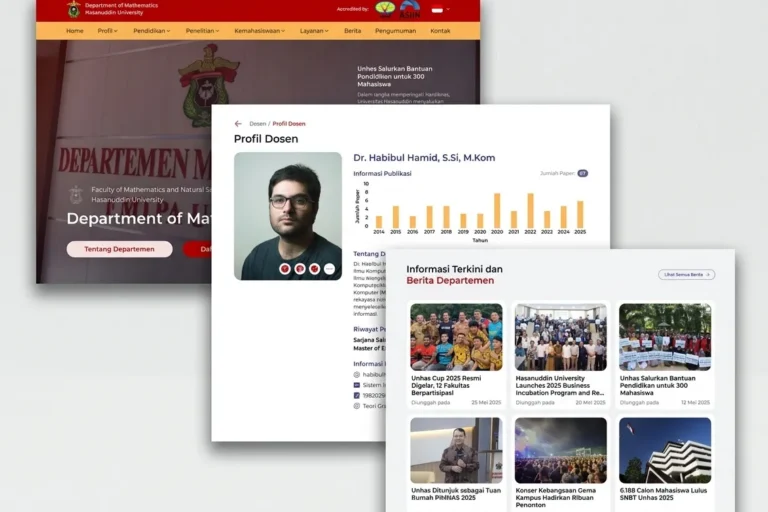
Departemen MIPA UNHAS
Universitas Hasanuddin
An official departmental website presenting academic information, news and activities, built so staff can maintain it without technical help.
Professional Services
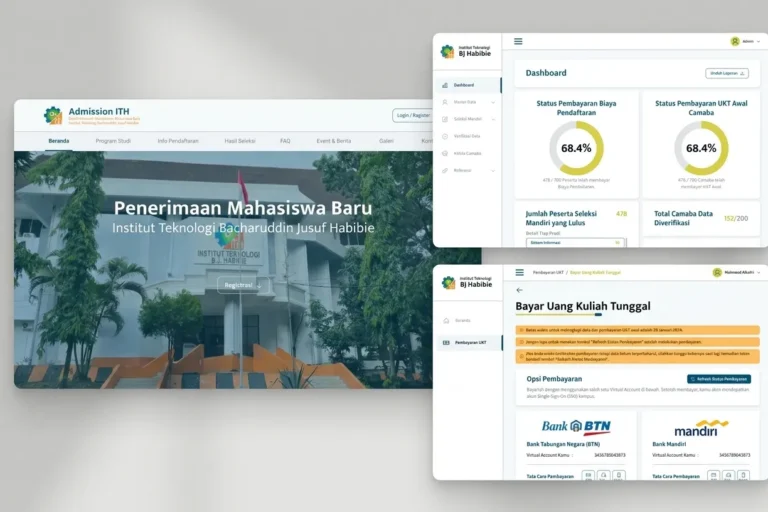
Admission ITH
Institut Teknologi BJ Habibie
A student admissions platform handling the full registration process online, from application through document upload to initial payment.
Local & Growing Businesses
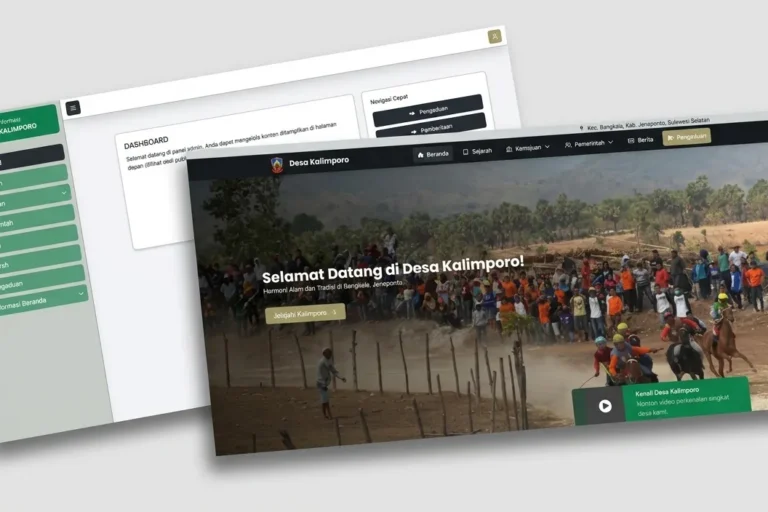
Desa Kalimporo
Desa Kalimporo
A village profile platform presenting governance structure, population data, local potential and village programmes to a wider audience.
Keep reading
Related articles.

Digital Growth
Borrowed Item Damaged or Lost? Who Pays Under Indonesian Law
A plain-English summary of the Indonesian Civil Code chapter on pinjam pakai (Articles 1740 to 1753): what a borrower and a lender owe, how…

Digital Growth
Borrow or Buy? A Simple Test for Things You Rarely Use
A four-step test for deciding whether to borrow, rent or buy something you rarely use: count the uses, work out the cost per use,…
Digital Growth
What Is a Library of Things? How Borrowing Everyday Items Works
What a library of things is, what it lends, how borrowing works and the rules that keep a shared collection going, using pages from…