
What Is Digital Operations, and Does Your Small Business Actually Need It?
Digital operations is not a buzzword for a big-company IT team. It is the plumbing behind every enquiry, invoice and follow-up. What it means at small business scale, and how to tell if yours needs attention.

zabil

“Digital operations” sounds like something only a large company needs a department for. At small business size it means something much narrower: do the tools, data and manual steps behind an enquiry, a booking or an invoice actually work together, or does someone spend part of every day copying information from one place to another by hand? Most small businesses have some version of this problem long before anyone gives it a name.
What digital operations means at small business scale
Strip away the enterprise language and it comes down to a handful of everyday systems: the website or form that captures an enquiry, the inbox or WhatsApp thread where the conversation continues, the spreadsheet or CRM that is supposed to track it, the accounting software that invoices for it, and whatever tool schedules the follow-up. Digital operations is simply whether those pieces are connected, or whether a person is the connection, retyping the same details every time something moves from one step to the next.
Neither state is inherently wrong. A two-person business with a handful of enquiries a week can run perfectly well on a shared spreadsheet and some discipline. The question is not whether you have “proper systems”, but whether the current setup is quietly costing you leads, hours or accuracy as the business grows.
Signs it is worth paying attention to
- Enquiries live in three different places — a form inbox, WhatsApp, a paper notebook — and no single person or list owns following them all up.
- The same customer detail gets typed more than once: once into a form, again into an invoice, again into a delivery note.
- A staff member’s day is dominated by repetitive admin rather than the work they were actually hired for.
- Nobody can say, without digging through several tools, how many enquiries came in last month or how many became paying customers.
- Reporting to yourself or a partner is a manual scramble at the end of the month instead of a five-minute check.
One or two of these is normal. Several at once, especially the ones that touch leads directly, usually mean money is leaking quietly rather than dramatically — closer to the enquiries never turning into customers you can point to than to an obvious crisis.
Where to start, in order
The mistake most small businesses make once they notice this is trying to fix everything at once, usually by buying one large platform that promises to run the whole business. That is rarely the right first move. A better order:
- Write down what actually happens today, step by step, from the moment an enquiry arrives to the moment it is invoiced. On paper first, not in a tool.
- Find the one step that costs the most time or loses the most leads, and fix only that one.
- Connect two systems at a time — for example, the enquiry form and wherever leads are tracked — rather than replacing everything with a single platform a small team will not fully use.
- Automate the step that is repetitive and well understood, not the ones that still need judgement. Our note on when to automate a manual process, and when to leave it covers how to tell the difference.
- Give it a month, then check whether the change actually saved time or just moved the work somewhere else.
What this is not
Digital operations work at small business size is not an ERP rollout, and it does not require a technical hire. For most businesses it is a well-used spreadsheet, two or three tools that actually talk to each other, and someone accountable for checking that leads do not sit untouched. The goal is calibrated to the size of the business, the same way we think about digital transformation for growing businesses generally: fix what is actually slowing you down, not what a bigger company would install.
If you recognise more than a couple of the signs above and are not sure where the biggest leak is, our systems and technology work starts with exactly that mapping exercise. You can also get in touch and describe how enquiries move through your business today — that is usually enough to see where to start.
Layanan terkait
Karya terkait
Di mana ini telah diterapkan.
Jasa Profesional
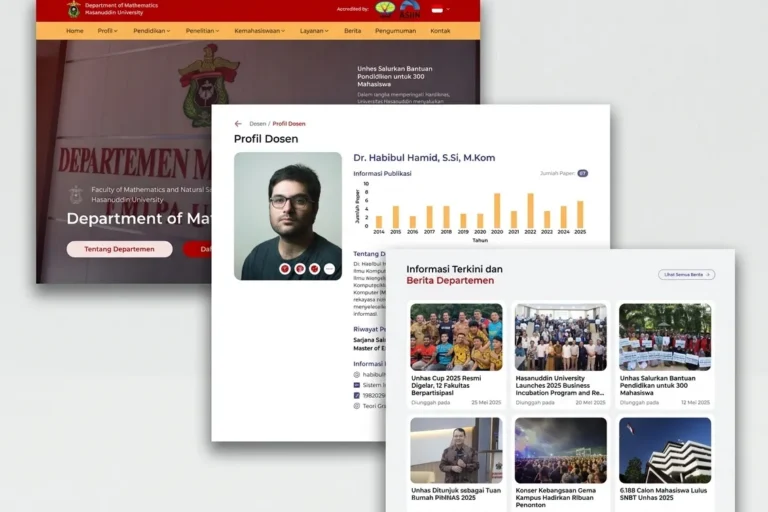
Departemen MIPA UNHAS
Universitas Hasanuddin
Website resmi departemen yang menyajikan informasi akademik, berita, dan kegiatan, dibangun agar staf dapat mengelolanya sendiri tanpa bantuan teknis.
Jasa Profesional
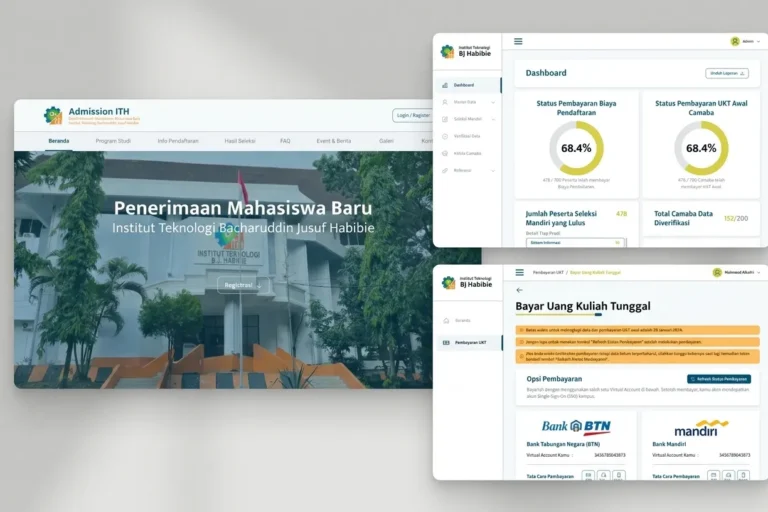
Admission ITH
Institut Teknologi BJ Habibie
Platform pendaftaran mahasiswa baru yang menangani seluruh proses pendaftaran secara online, mulai dari pengisian formulir, unggah dokumen, hingga pembayaran awal.
Local & Growing Businesses
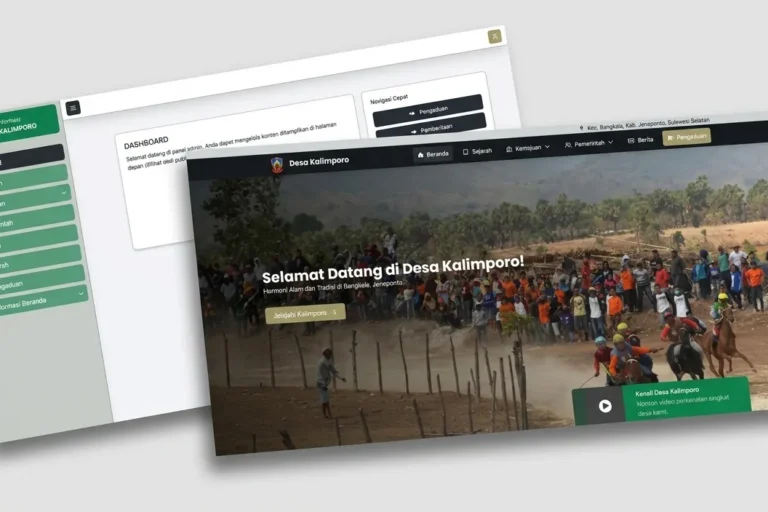
Desa Kalimporo
Desa Kalimporo
Platform profil desa yang menyajikan struktur pemerintahan, data kependudukan, potensi lokal, dan program desa kepada khalayak yang lebih luas.