
Does Your Bali Business Need a Multilingual Website?
Should a Bali business website speak more than one language? How to decide from your own enquiries, and how to set it up so Google and guests both understand it.

zabil

A guesthouse in Ubud, a surf school in Canggu and a clinic in Denpasar can all have customers who read English, Indonesian or something else entirely. So the question comes up sooner or later: should the website speak more than one language?
The honest answer is “it depends on who actually enquires”, and the way you set it up matters as much as the decision itself. A badly built multilingual site can be worse than a good single-language one. This guide draws on Google Search Central’s documentation on multilingual sites and localised page versions, and keeps to what those pages actually say.
Start with who really enquires
Before translating anything, look at the evidence you already have. You do not need new tools.
- Your inbox and WhatsApp. What language are enquiries written in? Which language do people switch to when they ask a follow-up question?
- Your reviews. The languages of your Google reviews show who has already used you. Our Google Business Profile guide covers how to read and use them.
- Search Console. The performance report can group data by country, which tells you where your search visitors are located. Our Google Search Console beginner’s guide explains how to set it up.
Country is only a rough guide to language, since a visitor from Australia may prefer Indonesian and a visitor from Jakarta may prefer English. Treat the data as a hint, not a verdict. A simple rule of ours: add a language only when you are confident you can keep it as accurate and up to date as your original.
Give each language its own address
Google recommends using different URLs for each language version of a page, rather than using cookies or browser settings to change the language on the same page. If you reroute or change content dynamically, Google warns it might not find and crawl all your versions, because its crawler usually originates from the USA and sends requests without a language preference.
For URL structure, Google’s documentation lists these options:
- Country-specific domain (such as
example.de): clear targeting, but it can be expensive and can target only a single country. - Subdomain (such as
de.example.com): easy to set up, and easy to separate. - Subdirectory (such as
example.com/de/): easy to set up and low maintenance because it uses the same host. - URL parameters (such as
?loc=de): Google marks this as not recommended.
For a small business on one WordPress site, a subdirectory such as /id/ for Indonesian is usually the easiest to manage. That is our judgement, built on Google’s note that it is easy to set up and low maintenance.
Avoid the half-translated site
A common shortcut is a language switcher that translates only the menu, buttons and footer while the main text stays in English. Google addresses this directly: translating only the boilerplate text while keeping the bulk of the content in a single language can create a bad user experience if the same content appears multiple times in search results with various boilerplate languages.
You can test your own site in a minute. Switch the language, open a service page, and read the main text, not the menu. If the paragraphs did not change, it is not a multilingual page yet.
Google also says it works out a page’s language from the visible content, not from code such as the lang attribute or the URL. Its advice is to use a single language for content and navigation on each page, and to avoid side-by-side translations.
Let people choose, and tell Google which page is which
Two more points from Google’s guidance:
- Do not auto-redirect by guessing. Avoid redirecting users from one language version to another based on what you think their language may be, because that can stop both users and search engines from seeing all your versions. Google also says not to use IP analysis to adapt content. Add visible links so people can choose.
- Use hreflang. These annotations tell Google which versions are translations of each other. Google says each language version must list itself as well as all the others, and that the addresses must be fully qualified, including
https://. If two pages do not point to each other, the tags are ignored.
A simple English and Indonesian pair would carry lines like these on both pages:
<link rel="alternate" hreflang="en" href="https://example.com/" /><link rel="alternate" hreflang="id" href="https://example.com/id/" /><link rel="alternate" hreflang="x-default" href="https://example.com/" />
The x-default line is the fallback for languages you do not cover. Google supports three equivalent ways to give this information: HTML tags, HTTP headers or a sitemap, and it says there is no benefit in using all three. Language codes follow the ISO 639-1 standard, optionally followed by a region code, such as en-AU. A good multilingual plugin or developer can add all of this for you, so the job is to check that it is there, not to write it by hand.
Translation quality is a business question
We looked for official Google guidance on whether machine translation is penalised, and the pages we read do not say that, so we will not claim it. The real risk is closer to home: stiff or wrong wording on a price list, cancellation policy or booking form costs trust and creates disputes, whatever Google thinks.
Practical habits:
- Have a fluent speaker review the pages that carry money or promises: home, main services or rooms, prices, terms and contact.
- Localise as well as translate. Check currency, date formats, phone number formats and local details such as directions.
- Start small. Translate the pages that lead to enquiries first, and leave the blog until later.
- Plan upkeep. Each time a price, opening time or policy changes, every language version needs the same update.
When one language is the better choice
If almost all your enquiries come in one language and your offer targets one market, a clear, well-written single-language site often beats a thin multilingual one. The same goes if you cannot yet keep a second language accurate. A page that is out of date in one language is worse than no page.
Hospitality and tourism businesses often have a strong case for more than one language, because guests tend to decide in the language they are most comfortable in. Our guides to direct bookings for Bali villas and hotels and restaurant and cafe marketing in Bali show where a translated page fits in the wider plan.
A short set-up checklist
- List the languages your real enquiries and reviews use.
- Pick a URL structure, usually a subdirectory such as
/id/. - Translate the highest-value pages fully, not just the menu.
- Have a fluent speaker review them.
- Add hreflang, including
x-default, and a visible language switcher with no forced redirects. - Check the pages are indexed in Search Console after a few weeks.
Where to start
If you have never looked at who enquires, start there. Ten minutes in your inbox and your Search Console country report will usually show whether a second language is worth the effort.
We work with tourism and hospitality businesses from our Bali and Makassar base, and language set-up is part of how we approach SEO for them. If you want an honest view of whether your site needs another language, tell us about your business and we will suggest where to start.
Tagged
Related work
Where this has been applied.
Professional Services
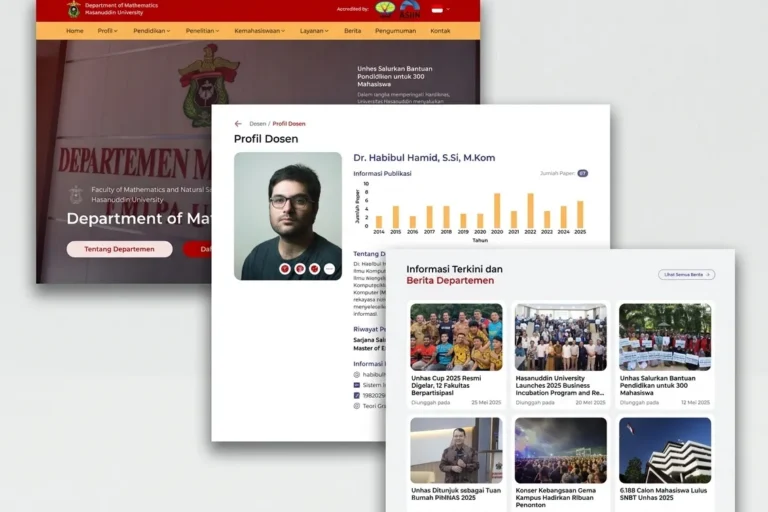
Departemen MIPA UNHAS
Universitas Hasanuddin
An official departmental website presenting academic information, news and activities, built so staff can maintain it without technical help.
Professional Services
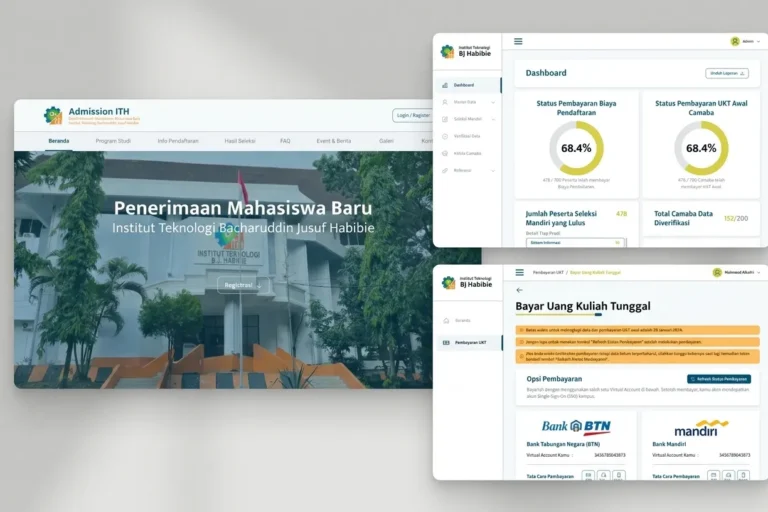
Admission ITH
Institut Teknologi BJ Habibie
A student admissions platform handling the full registration process online, from application through document upload to initial payment.
Local & Growing Businesses
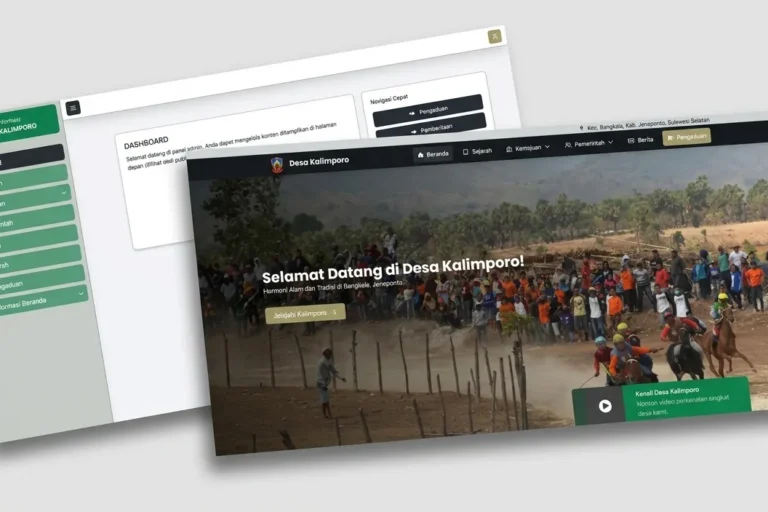
Desa Kalimporo
Desa Kalimporo
A village profile platform presenting governance structure, population data, local potential and village programmes to a wider audience.
Keep reading
Related articles.

Web Development
Who Owns Your Website? A Domain, Hosting and Login Checklist
Your domain, hosting, admin logins and Google accounts can each belong to a different person. A practical checklist so you know who holds the…

Web Development
WordPress Security for Small Businesses: A Plain-English Checklist
A plain-English WordPress security checklist for business owners: updates, plugins, passwords, backups, and what to ask your developer and host.
Web Development
Slow WordPress Site: Should You Fix It or Rebuild It?
Most slow WordPress sites can be fixed without a rebuild, but some cannot. How to decide, before you spend anything.